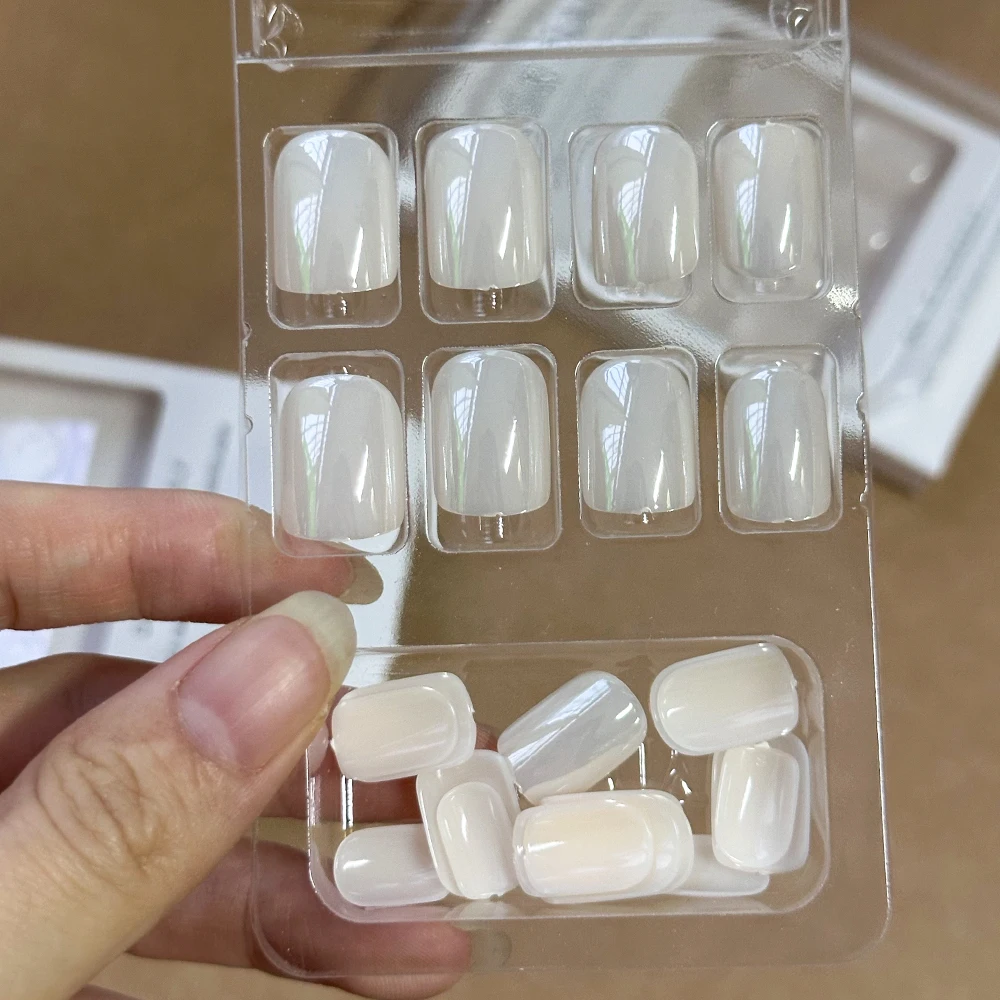
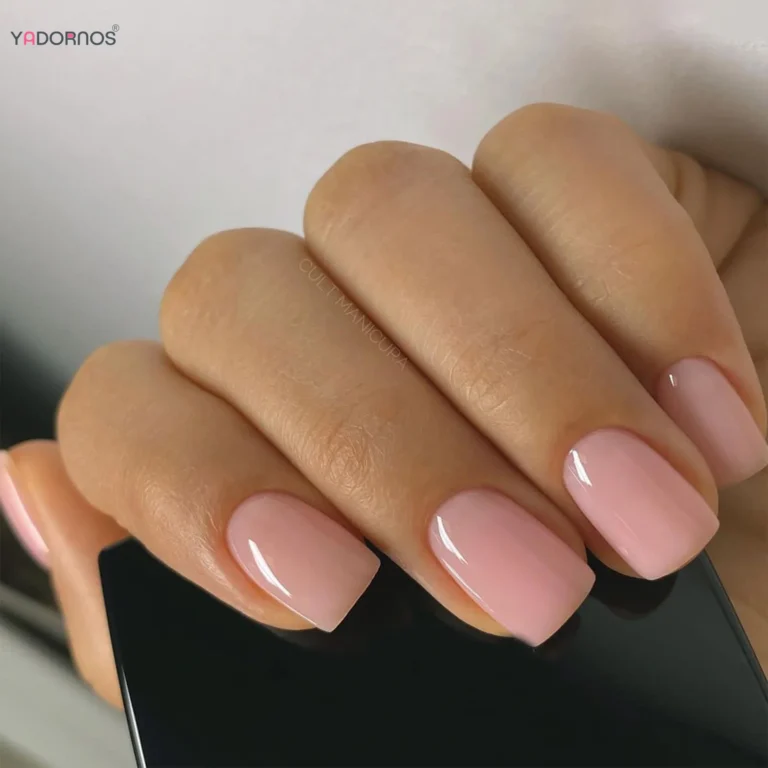
Rounded-square and square press-on nails share a relatively straight free edge, but the corners change the overall silhouette. A square nail keeps more defined corners; a rounded-square nail softens those corners while preserving much of the square structure.
What changes at the corners?
Look at the transition from the sidewall to the free edge. On a square nail, that change is more abrupt. On a rounded-square nail, the corner is eased into a curve.
| Feature | Square | Rounded-square |
|---|---|---|
| Free edge | Flat and clearly defined. | Still fairly flat. |
| Corners | More angular. | Softened or curved. |
| Visual effect | More geometric. | More blended at the edges. |
| What to inspect in photos | Corner sharpness and side lines. | How much rounding is actually present. |
Labels are not perfectly standardized
One seller’s “square” may look softer than another seller’s, and “rounded-square” can range from barely softened to noticeably curved. Use the actual product photograph and stated shape rather than relying on the label alone.
This is especially important when comparing supplier images from different collections.
Length can change the impression
A short square can look compact and structured, while a long square can look much more dramatic even though the corner geometry is similar. Keep length separate from shape when making the decision.
If you are specifically comparing short options, see short square vs. short oval as another controlled shape comparison.
French tips can emphasize the free edge
A contrasting French line can draw attention to the straightness of the tip and the shape of the corners. A solid color may make the overall outline more important than the painted edge.
For French-specific styling, compare thin and bold French tips.
The base fit still matters more than the corner label
The free-edge shape describes the visible tip, but fit is determined closer to the nail plate: width, cuticle-area alignment and curvature. A rounded-square nail is not automatically a better fit simply because the corners look softer.
Use the press-on fit checklist before application.
A simple way to choose
- Choose square if the crisp corner and straight edge are part of the look you want.
- Choose rounded-square if you like square structure but want the corners visually softened.
- If both look good, let the exact design, length and available fit decide.
For the bigger picture, the main nail-shape guide compares square with more curved and tapered silhouettes.
The conversation