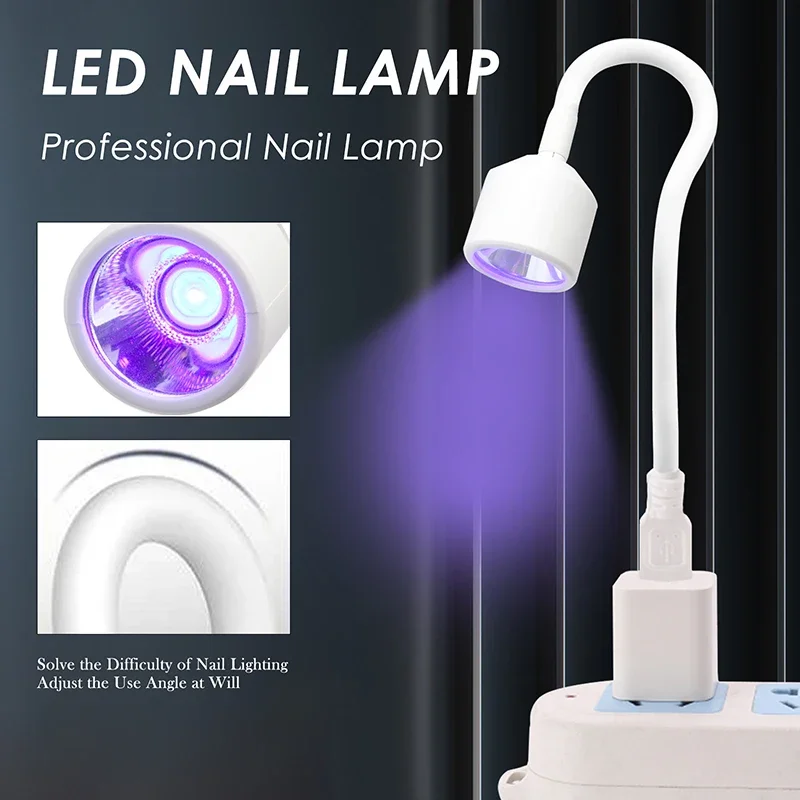
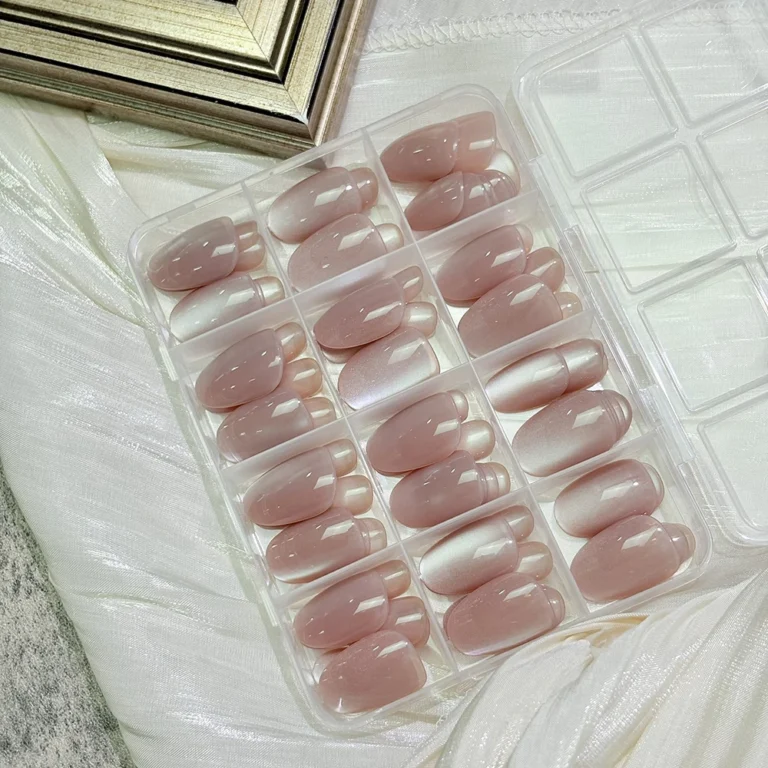
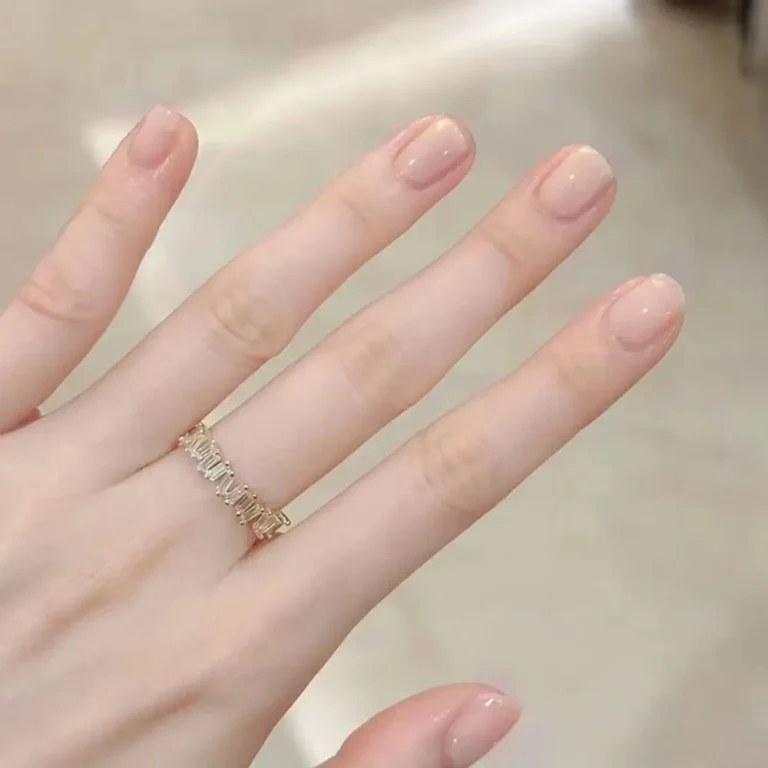
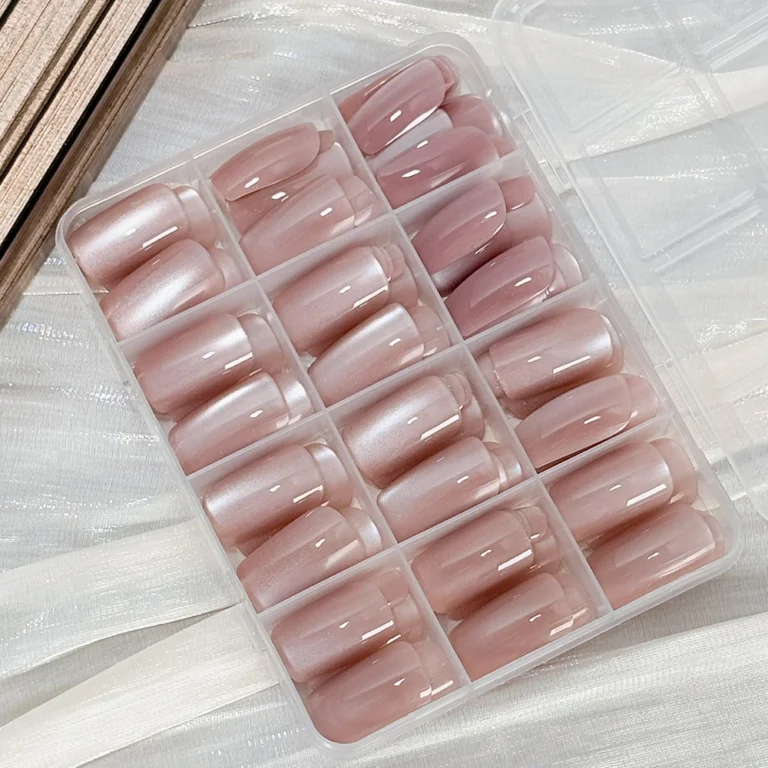
A clear-looking press-on and a fully opaque, decorated press-on can behave very differently when gel adhesive needs light to cure beneath the tip. The question is not whether a nail looks translucent in a photograph; it is whether the exact tip, gel and lamp have been confirmed as a compatible system. If that information is missing, do not improvise a cure.
This is a focused guide to light reaching the adhesive under a full-cover tip. For the broader explanation of gel products and curing lamps, read our UV/LED lamp and gel adhesive guide.
Why the nail tip changes the curing decision
Light-cured nail gels rely on exposure to suitable wavelengths for the required curing process. The lamp shines from above, while adhesive placed beneath a full-cover tip may be partly shielded by that tip. A coating, pigment, foil, mirror finish or dense artwork may reduce how much light reaches the gel.
That is why the same lamp may be appropriate for a manufacturer-approved clear extension system but unsuitable for a finished opaque decorative press-on. The product instructions—not the number of watts advertised on a lamp—must establish compatibility and curing conditions.
Clear, translucent and opaque: what each tells you
| Tip appearance | Practical implication | What still needs confirmation |
|---|---|---|
| Clear, unpainted full-cover tip | It may let more curing light pass through than a strongly pigmented tip. | Whether the exact gel, tip material, lamp and application method are approved together. |
| Sheer or lightly tinted tip | Light transmission may differ from a bare clear tip. | Manufacturer guidance; apparent transparency to your eyes does not verify a complete cure. |
| Opaque color, dark finish or dense decoration | The surface may obstruct light needed beneath the nail. | Do not use under-tip light-cured adhesive unless the product maker specifically confirms a safe compatible system. |
| Pre-glued press-on | Its pre-applied attachment system may not require a lamp at all. | Follow the specific package instructions rather than adding a different gel underneath. |
A photograph cannot measure how much usable curing light passes through a particular nail. Do not treat a flashlight test, a surface that feels firm, or extra time in the lamp as proof that gel hidden beneath a press-on has cured fully.
Three questions to answer before using gel underneath a tip
1. Is the adhesive intended to cure under full-cover tips?
Read the label and instructions for the exact adhesive formulation. Some products are designed for specified gel-tip systems. Traditional air-drying nail glue, adhesive tabs and pre-applied adhesives work differently; do not substitute one method for another without product instructions.
2. Does the tip allow the required light through?
Look for explicit compatibility guidance for the tip and any color or design layers. A clear unpainted tip may be a candidate in an approved system, but even clear appearance is not a guarantee. If the tip is opaque and no compatible curing method is documented, choose a different attachment approach.
3. Does the lamp match the gel instructions?
Verify the gel maker’s lamp requirements, exposure instructions and any recommended product combination. A generic “UV/LED” label, a longer timer or a higher advertised wattage does not independently establish that hidden adhesive is correctly cured. The portable versus full-size lamp comparison helps separate useful lamp features from assumptions about curing performance.
Why uncured gel deserves special caution
Under-cured or uncured artificial nail products can increase exposure to reactive ingredients. The British Association of Dermatologists has warned about allergy concerns from contact with uncured nail materials and inadequate curing, particularly in home-use kits. The U.S. Food and Drug Administration advises consumers to follow cosmetic nail-product directions and heed warnings, including those related to irritation or allergic reactions.
Keep uncured gel away from the skin and cuticle area, follow product-specific directions and never cover or leave a product in place simply because it seems dry at the edge. Stop using a product if burning, rash, swelling, blistering or another concerning reaction appears, and seek medical advice when appropriate.
If your chosen press-on is opaque, what now?
There is no need to force a gel-cure method onto a finished decorative set. Check whether the nail maker recommends adhesive tabs or conventional nail glue for that particular set. Those approaches do not depend on curing UV/LED gel through the nail, but they still require their own preparation, application, removal and allergy precautions.
For example, a dark graphic press-on with an opaque painted surface and a clear full-cover tip for a gel-extension system might look similar in a product gallery. Their intended attachment methods should not be assumed to be interchangeable.
What Eazie Nails currently offers for comparison
The Eazie Gel Grip preview describes a light-cured adhesive for compatible nail-tip applications. The Mini Cure and Glow Cure are also preview products. Their existence does not establish that a particular gel, lamp and finished nail set can safely be combined. Check final instructions and compatibility details before making that decision; these products are currently listed as Coming Soon, with checkout unavailable.
Quick decision checklist
- Identify the exact nail tip and its finish, rather than relying only on a photo.
- Read the adhesive label to confirm that it is meant for that type of nail application.
- Find written compatibility guidance for the tip, adhesive and lamp combination.
- Do not attempt to compensate for blocked light by guessing longer curing times.
- If compatibility is unclear, use a different manufacturer-recommended attachment method or ask the seller before using the product.
For general precautions, see Product Safety & Use. If you cannot obtain enough information to verify a light-cured system, a useful question for the seller is: “Can you confirm the exact tip, gel and lamp combination and provide the complete curing instructions?”
The conversation